
Guide written by: Kerise Myers
The Daily Reality of RSD
Everyday can be a struggle when you’re trying to manage with something like this.
When you spent most of your childhood through adulthood hearing similar comments like:
“Stop being so foolish”
“You’re never going to achieve anything if you don’t finish your coursework”
“What is wrong with you?”
“Stop being so weird”
“Stop biting your nails!”
“You’re going to fail if you don’t…”
Any of those sound familiar to you?
And when you hear it all so often throughout most of your childhood life growing up, you do end up beginning to believe it to be true.
What are the known causes?
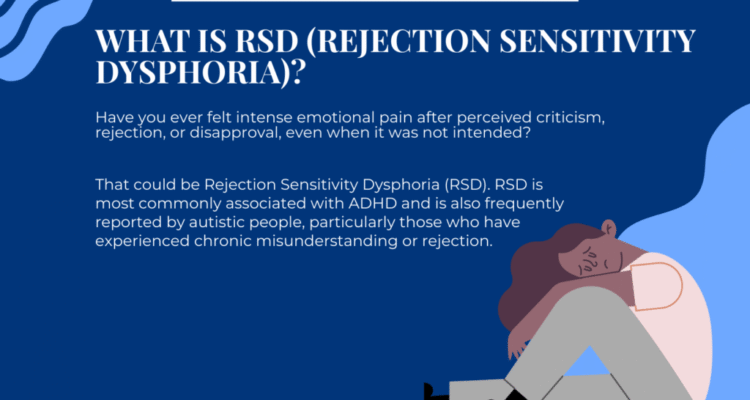
RSD (Rejection Sensitivity Dysphoria) doesn’t usually come from one single experience. It often develops over time, especially in people who have grown up feeling frequently criticised, misunderstood, or rejected.
It is most commonly linked with ADHD and autism, where repeated negative feedback, social misunderstandings, and pressure to mask can take a real emotional toll.
Over time, our brains learn to expect rejection, even when none is intended. This can make everyday interactions feel overwhelming and emotionally painful.
You are not alone in this
Many people with RSD struggle quietly, often without even realising there is a reason their emotional reactions feel so intense
RSD can affect education, work, friendships or intimate relationships, and everyday interactions. It may show up as fear of failure, avoiding tasks, people pleasing, shutting down, or feeling emotionally exhausted after situations that others seem to just brush off.
These responses are not weaknesses. They are signs of a nervous system that has learned to protect itself.
If this resonated with you, your experiences are valid, real and shared by many others.